
Hard Water and Seawater Compatibility: Choosing Fluorinated Surfactants for AFFF in Coastal Southeast Asia
ON
Coastal Southeast Asia depends on ports, shipyards, offshore support bases, refineries, and fuel terminals. In these locations, fire-protection systems often draw on water that is far from "ideal": hard groundwater, brackish water, or seawater. A foam concentrate that performs well with deionized water in the laboratory may behave very differently once diluted with the water available at the site.
For foam manufacturers, water compatibility is therefore a core formulation requirement. Selecting the right fluorinated surfactant, and balancing it with the rest of the formulation, is essential for producing reliable seawater compatible AFFF and consistent hard water firefighting foam.
Why Seawater Compatibility Matters for Ports, Offshore Facilities and Coastal Refineries
Seawater is often the only large-volume emergency water source at marine terminals, offshore platforms, jetties, and coastal refineries. Fire pumps may draw directly from the sea, and foam proportioning systems may be designed to operate with saline water.
Seawater typically contains around 3.0–3.5% dissolved salts, mainly sodium chloride, along with magnesium, calcium, sulfate, and other ions. This high ionic strength can influence surfactant solubility, micelle behavior, foam structure, and drainage rate.
If the concentrate is not designed for these conditions, users may see lower expansion, faster drainage, weaker spreading, or an unstable foam blanket. In a fire scenario, such variations can reduce the effectiveness of the response. Foam concentrates intended for seawater use should therefore be developed and tested with seawater, not only freshwater.
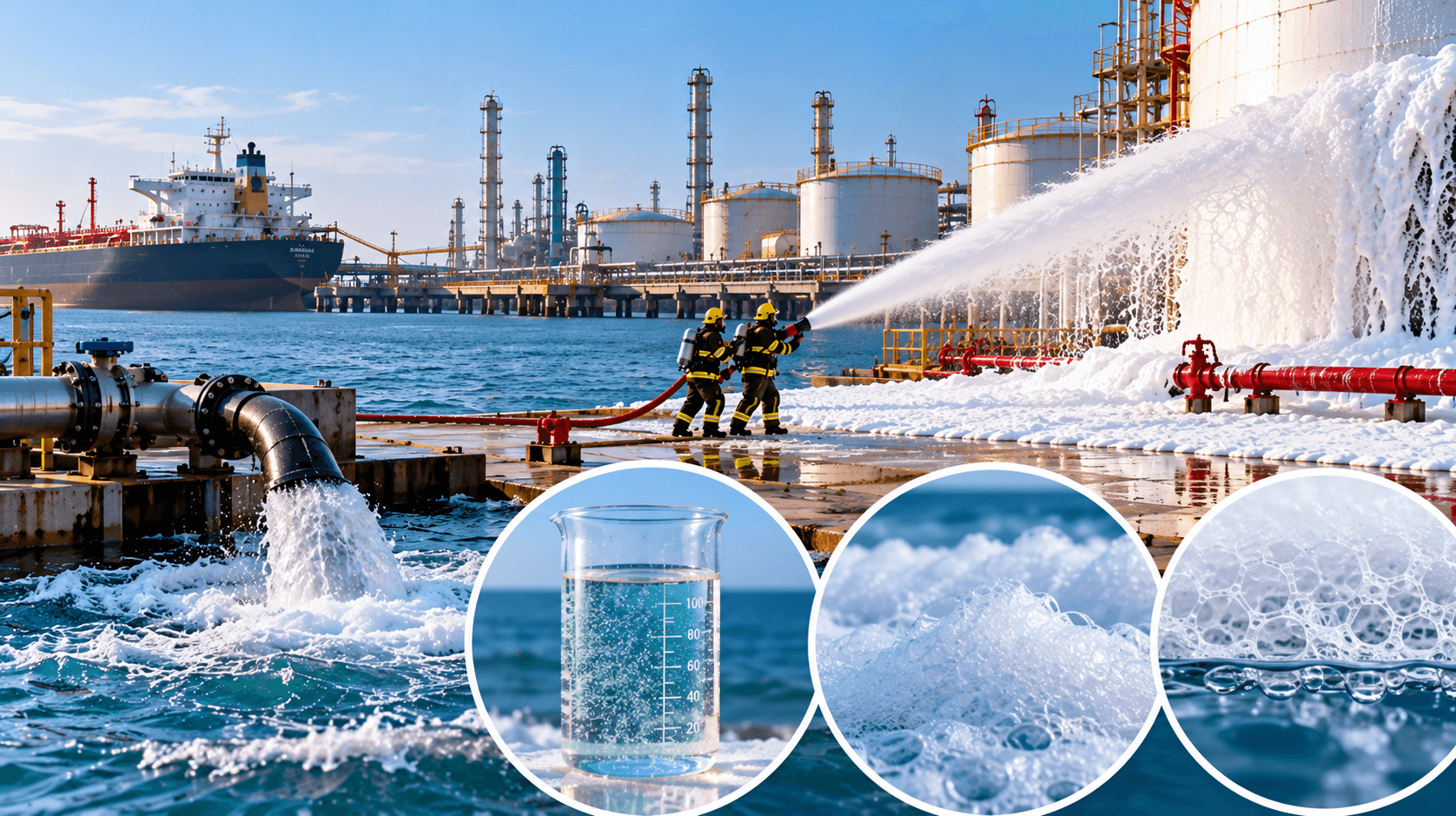
How Hard Water Ions Affect Foam Expansion and Drainage Time
Hardness is mainly caused by calcium and magnesium ions, often expressed as mg/L CaCO₃. Coastal aquifers may also contain elevated chlorides, sulfates, iron, or bicarbonates, particularly where seawater intrusion occurs.
These ions can affect AFFF in several ways:
- Reduce the solubility of some anionic surfactants
- Form insoluble salts or haze during dilution
- Alter bubble film elasticity and stability
- Lower foam expansion ratio
- Shorten 25% drainage time
- Reduce consistency between laboratory and field performance
Water quality can also affect the manufacturing process itself. Using untreated process water to produce foam concentrate may introduce calcium, magnesium, iron, or microbial contamination into the batch. For this reason, deionized or demineralized water with controlled conductivity should be used for production, and water-quality records should be maintained.
The Function of Fluorosurfactants in Maintaining Foam Performance
In AFFF, a fluorosurfactant helps lower the surface tension of the foam solution, supporting spreading and film-forming behavior on hydrocarbon fuels. It works together with hydrocarbon surfactants, solvents, and stabilizers, which are mainly responsible for foam generation and bubble stability.
In saline or hard water, the fluorosurfactant must remain active and compatible with the entire system. A suitable product should help the formulation maintain low surface tension, clear dilution behavior, and acceptable foam properties across different water types.
However, the fluorosurfactant alone does not guarantee seawater performance. Foam quality is determined by the balance of all components. Performance should be judged in the finished formula and at the intended proportioning rate, such as 1%, 3%, or 6%.
Key Formulation Factors for Seawater-Compatible AFFF
When developing a seawater-compatible concentrate, formulators should review the following factors:
- Fluorinated surfactant selection: Evaluate tolerance to electrolytes, compatibility with co-surfactants, and stability under storage conditions.
- Hydrocarbon surfactant package: Choose components that maintain foam expansion and drainage performance in saline or hard water.
- Solvent and hydrotrope system: Support solubility and low-temperature flowability without compromising foam quality or flash-point requirements.
- Electrolyte and additive control: Corrosion inhibitors, buffers, and preservatives should be checked for compatibility.
- pH range: Maintain a stable pH that suits both the surfactants and the materials in contact with the concentrate.
- Viscosity: Ensure the concentrate can be proportioned accurately through the intended equipment, including in hot ambient conditions.
- Corrosion behavior: Seawater-based systems may increase corrosion risk, so compatibility with relevant metals and system components should be considered.
The right balance depends on the target market, applicable standard, and customer specification.
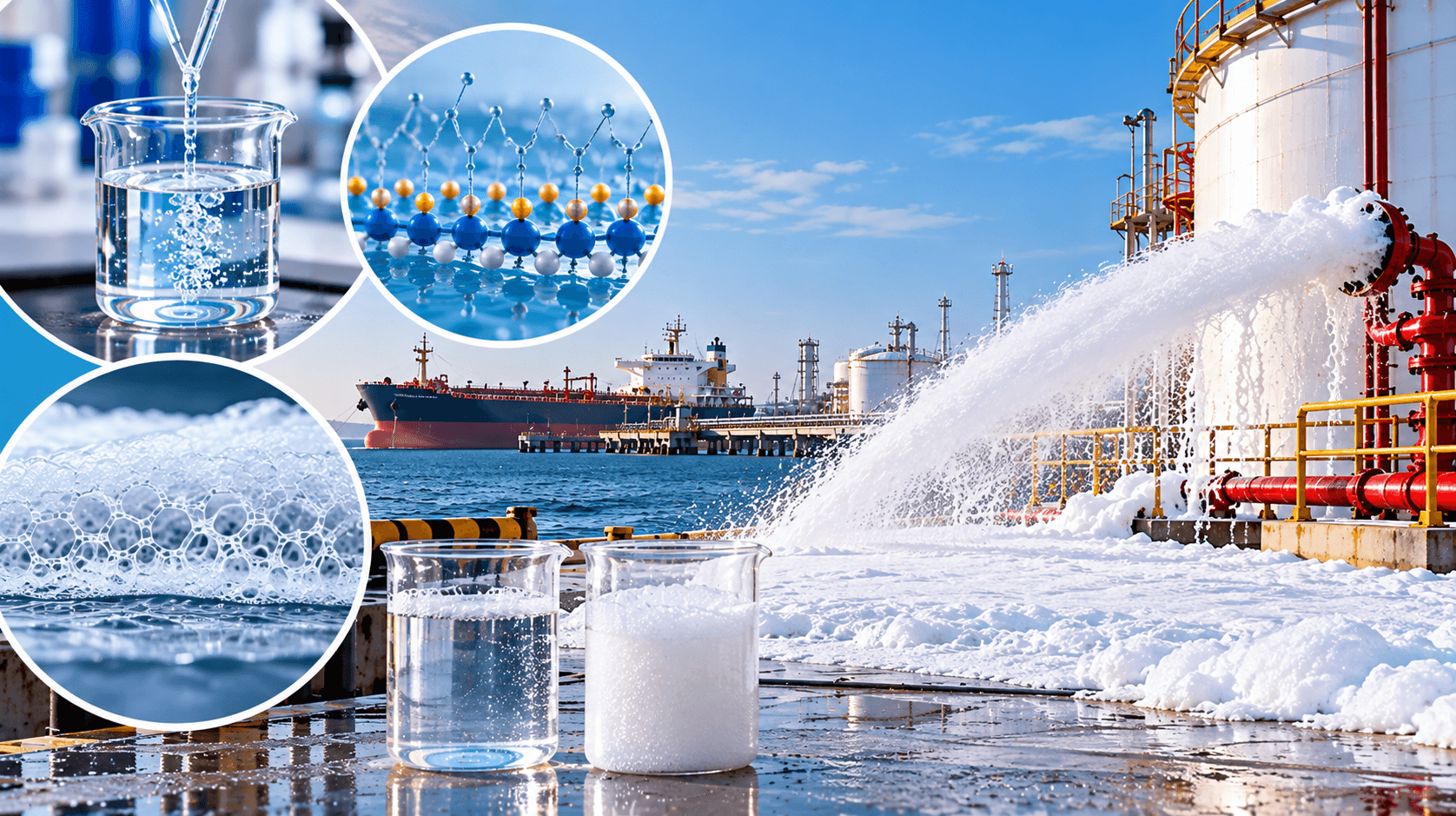
Testing AFFF with Freshwater, Hard Water and Seawater
Testing should be designed to show how the concentrate behaves under realistic water conditions. A practical evaluation program may include:
- Appearance and clarity of the premix in each water type
- Surface tension of the diluted solution
- Foam expansion ratio
- 25% drainage time
- Spreading and film-formation observations on suitable fuels
- Performance after heat aging and freeze–thaw cycles
- Comparison between laboratory batches and pilot-scale production
Where required, use standardized or synthetic seawater and hard-water preparations, and record the exact composition. Local site water should also be tested when possible. Final fire performance and certification must be verified using the applicable standard, such as EN, UL, ICAO, IMO, or customer-specific requirements, on the finished foam concentrate.
Common Mistakes in Foam Concentrate Formulation
Several recurring errors can lead to disappointing results in coastal markets:
- Testing only with deionized or soft water
- Selecting a fluorosurfactant only by price or surface-tension data
- Ignoring the effect of high electrolyte load on surfactant compatibility
- Failing to test after heat aging
- Changing a raw material supplier without re-evaluating the formulation
- Using inconsistent process water during production
- Overlooking viscosity changes in hot, humid conditions
- Assuming that a successful lab sample will behave identically at production scale
Avoiding these mistakes can significantly reduce rework, complaints, and failed project submissions.
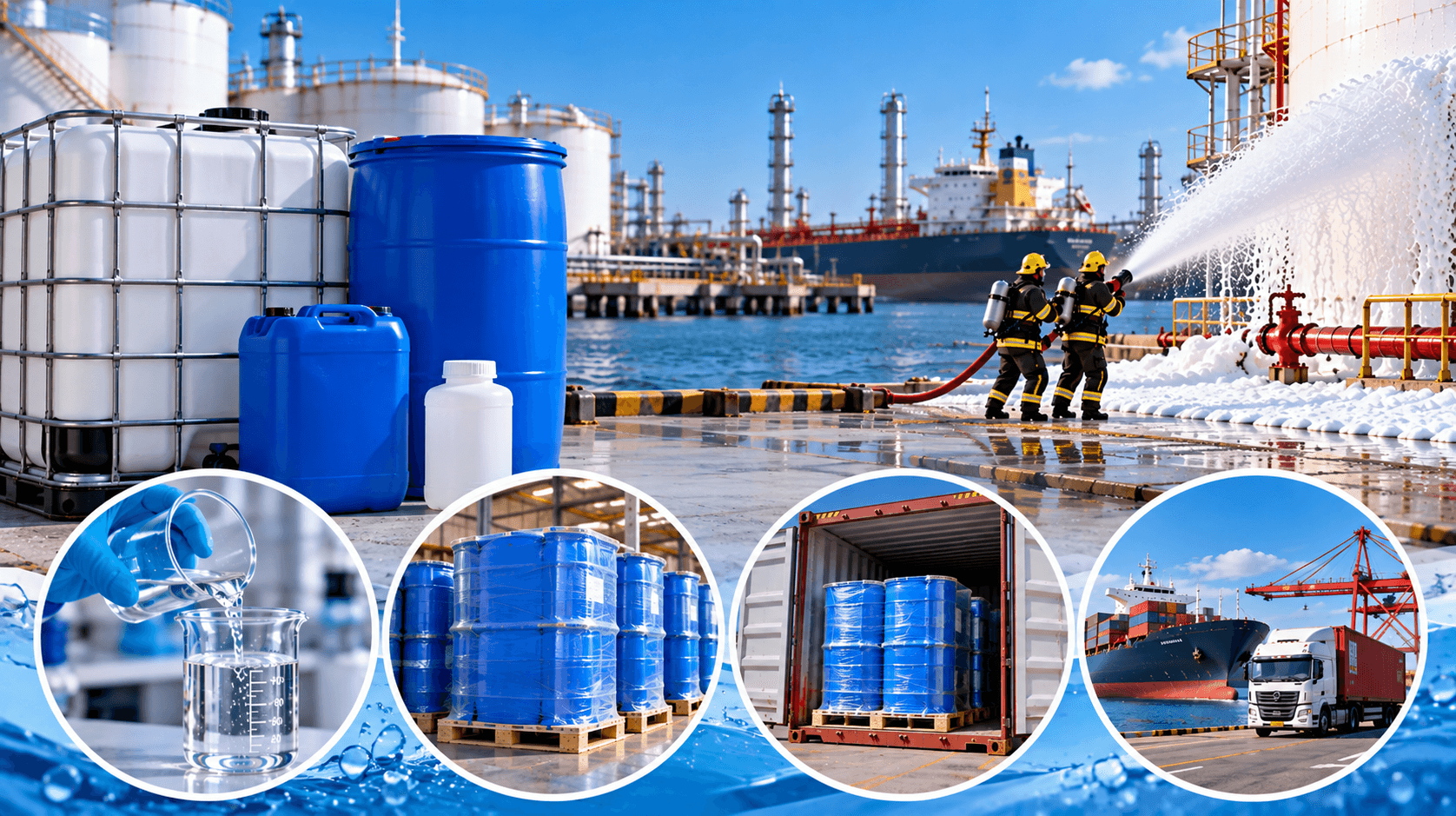
Fluorosurfactant Supply Options for Regional Foam Manufacturers
For foam producers in Southeast Asia, reliable sourcing is as important as technical performance. A qualified fluorinated surfactant supplier should provide consistent batches, clear technical documentation, export-ready packaging, reasonable lead times, and support during sample evaluation.
Manufacturers should request the TDS, SDS, COA, and product-specific regulatory information. Because fluorinated chemicals are subject to changing regional and customer-specific requirements, claims such as "fully compliant" or "environmentally safe" should be supported by documentation rather than assumed.
Many buyers also benefit from qualifying more than one source, provided each material is tested in the final formulation before commercial use.
ONESCHEM supports firefighting foam manufacturers with fluorosurfactant solutions for AFFF and related foam concentrates. Contact our technical team to request samples, TDS, SDS, COA, or formulation compatibility support for hard water and seawater applications.