
Polyacrylamide (PAM)
Title Tag: Polyacrylamide (PAM) CAS:9003-05-8
Flocculant | Anionic/Cation/Nonionic | Water Treatment
Description: High-efficiency Polyacrylamide (PAM) flocculants for wastewater sludge dewatering, mining, & industrial processes. Technical specs, molecular weights & application guidance.
Product Overview
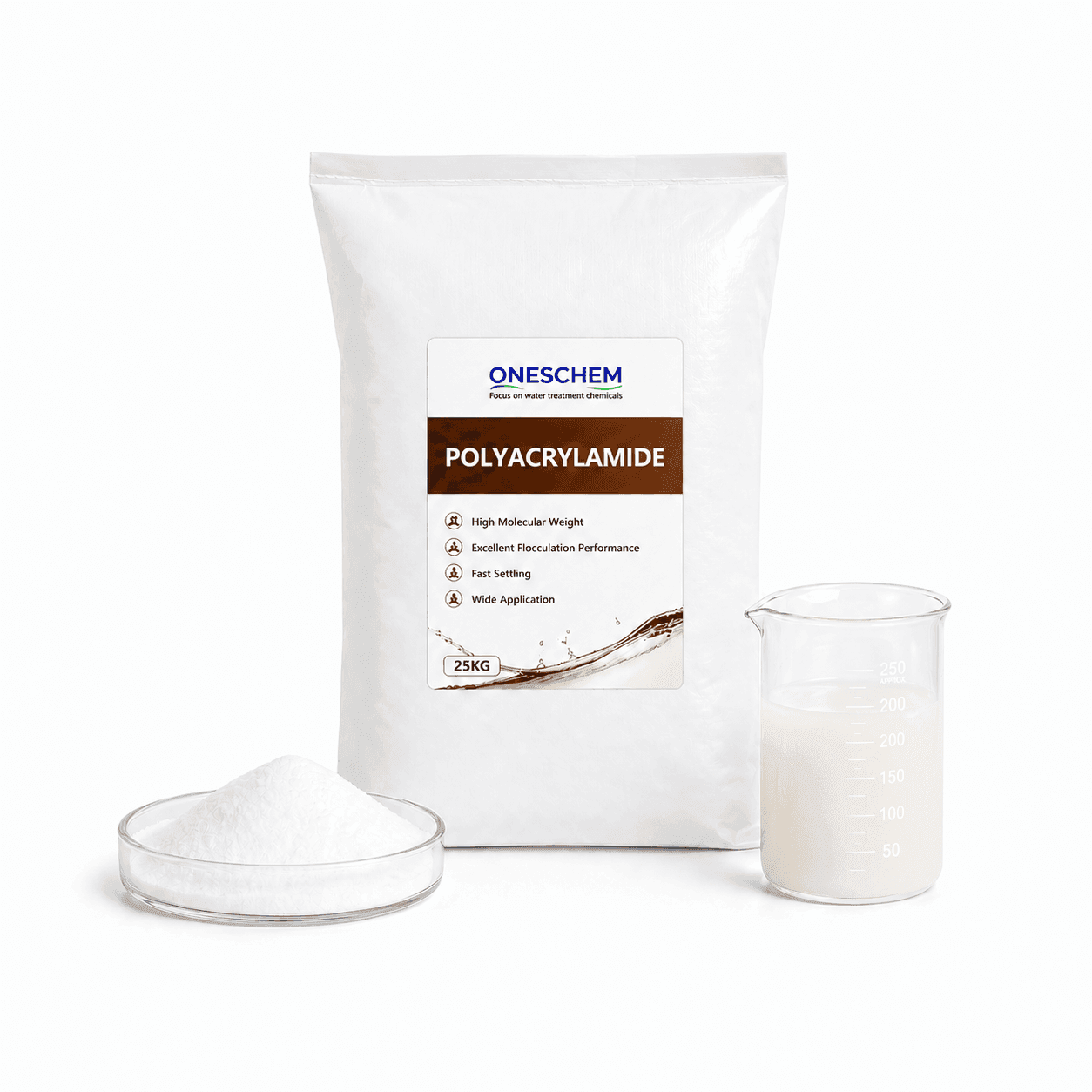
Polyacrylamide (PAM) is a high-molecular-weight polymer flocculant used for solid-liquid separation. It enhances sedimentation, filtration, and centrifugation efficiency in municipal wastewater, oil sands, and mineral processing.
Key Applications
Wastewater sludge dewatering
Mining & mineral processing
Oilfield drilling fluids
Papermaking retention aid
*Reach us to obtain a TDS & MSDS sheet
FAQ Section
How long does it take for your PAM powder to dissolve completely?
Under standard agitation, our Polyacrylamide usually requires 40 to 60 minutes to dissolve completely. We utilize advanced polymerization technology to ensure rapid solubility and prevent "fish-eye" lumps, reducing waste and protecting your dosing pumps.
How do I choose between Anionic (APAM) and Cationic (CPAM)?
It depends on your water quality. Anionic PAM is typically used for inorganic sludge settling and coal washing. Cationic PAM is essential for dewatering organic sludge (e.g., from textile, paper, or sewage plants). We recommend sending us a 1L water sample for a free jar test to select the exact molecular weight and charge density.
What is the shelf life of the solid PAM?
When stored in a cool, dry place effectively sealed, the solid Polyacrylamide has a shelf life of 24 months. However, once prepared into a liquid solution, it should be used within 24-48 hours as the viscosity degrades over time.
Get a quote
Send us your inquiry and we'll get back to you in 24 hours